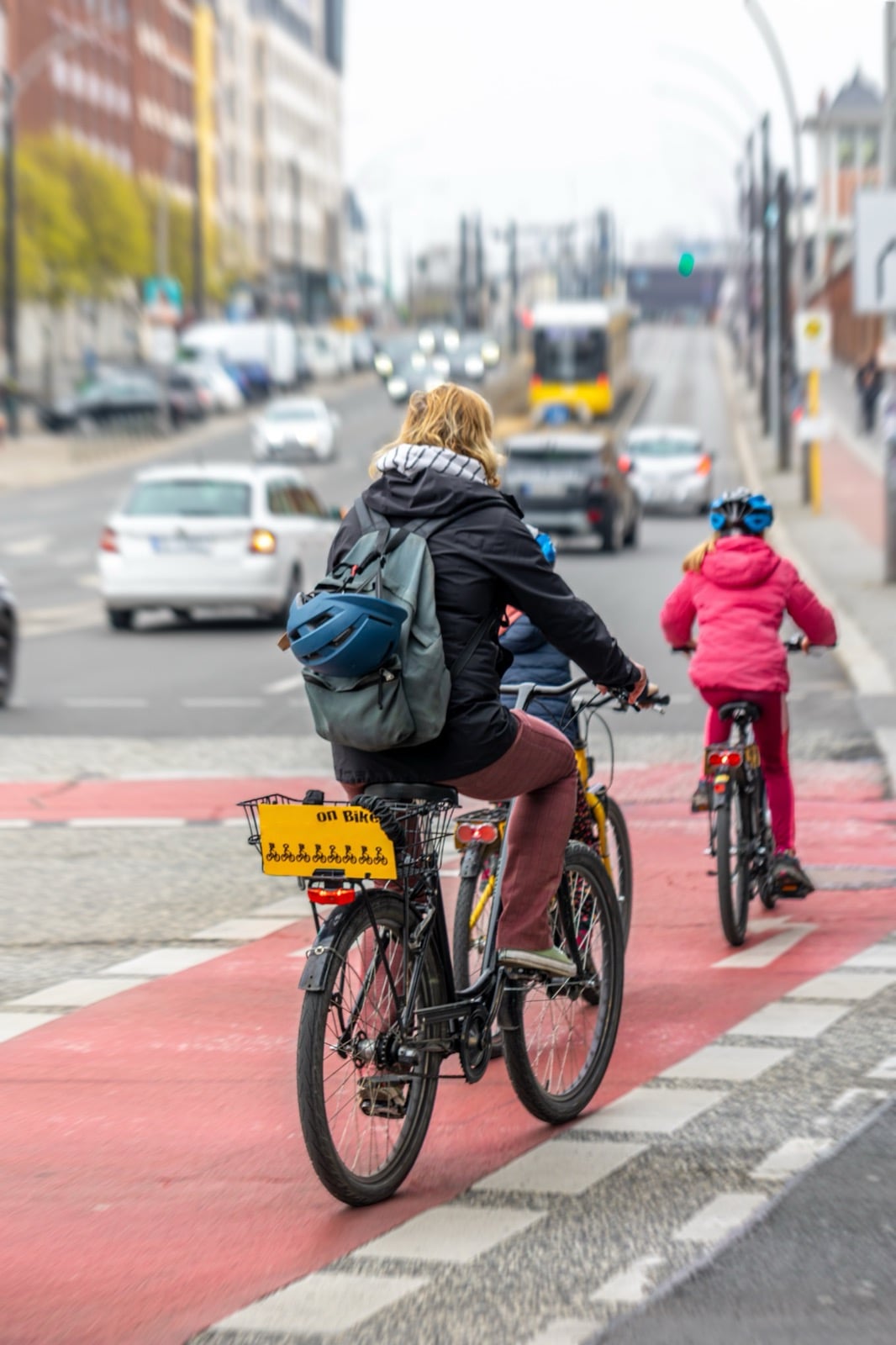
Ask residents whether they’d like to ride more and many will say yes. Ask how often they actually ride and the number drops sharply. Somewhere between interest and action, something gets in the way.
For councils, schools and workplaces, that gap is the most useful place to look. The people in it already want to ride. The question is what’s stopping them.
The usual barriers
The reasons people give tend to fall into a few groups.
Safety, real and perceived
Fear of traffic is the barrier most often named. It isn’t only about crash statistics. A route can be statistically safe and still feel stressful, and how it feels decides whether people ride it. One fast road, one complicated intersection or one gap in a protected lane can be enough to put someone off the whole trip.
Not knowing the way
Many people don’t know a comfortable route between home and where they want to go. The obvious route is often the one designed for cars. The quieter alternative exists, but nobody has shown them.
Confidence and company
Riding alone, in traffic, on an unfamiliar route is a lot to ask of someone who hasn’t ridden for years. Riding with a small group, at an easy pace, with someone who knows the way, is very different.
The trip either side of the ride
No safe place to leave the bike. Nowhere to change at work. A hill on the way home. These practical details decide whether a first ride becomes a regular one.
Habit
Even when the other barriers are dealt with, the car or the bus is the default. Changing a routine takes a reason and a little support at the start.
Why a pilot, rather than a survey alone
Surveys tell you what people say. A pilot tells you what they do when the barriers are lowered.
A focused pilot might offer a few weeks of organised group rides on a planned route, a bike bus to a school, or a ride-to-work program for one site. Over the pilot you can learn:
- Who takes part, and who signs up but doesn’t come
- Which routes people actually use, and where they deviate from the plan
- Whether they come back, week after week
- What they report about hazards and gaps along the way
That combination of participation and rider feedback gives you something a survey can’t: evidence about what changes behaviour in your area.
Keep the first pilot small
A good first pilot answers one clear question. For example: “If we run a weekly guided ride from the station to the business park, how many staff ride regularly after six weeks?” Small enough to run well, specific enough to learn from.
Try the numbers
Party Onbici’s pilot simulator lets you pick an area, set the number of riders and the length of the pilot, and see indicative outcomes such as expected trips, distance, CO₂ avoided and health benefits. You can download the result as a proposal PDF to start the conversation internally. The figures are estimates, and the assumptions are listed alongside them.
Over the next five Fridays we’ll look at what a pilot can show: missing connections, repeat participation, what to measure, how rider feedback helps prioritise, and what a focused pilot could look like.
Talk to us about a pilot for your council, school or workplace: hello@partyonbici.com.